Uganda is a year-round safari destination, but choosing the best time to visit Uganda for a safari and gorilla trekking can make a significant difference to your overall experience. The country has a tropical climate, diverse landscapes and several distinct ecosystems, meaning weather conditions can vary from one region to another.
If you are planning to combine gorilla trekking in Bwindi Impenetrable National Park with wildlife viewing in destinations such as Queen Elizabeth, Murchison Falls, Kibale or Kidepo Valley National Parks, you need to consider more than simply whether it will rain. Road conditions, forest trails, wildlife behaviour, accommodation availability and seasonal demand can all affect your safari.
Generally, the dry seasons from June to September and December to February are considered the best time for a Uganda safari and gorilla trekking. During these periods, trekking trails are often easier to navigate and wildlife viewing can be rewarding. However, the wetter months of March to May and October to November can also be excellent, particularly if you prefer fewer visitors, greener scenery and potentially lower safari costs.
The ideal time ultimately depends on what you want to see and experience.
Uganda’s Climate and Safari Seasons
Uganda lies across the equator, but its relatively high elevation means that much of the country has a pleasant climate rather than consistently hot equatorial conditions. Temperatures vary according to altitude and location, while rainfall patterns differ between regions.
Instead of having four conventional seasons, Uganda’s safari calendar is generally divided into dry seasons and wet seasons.
The first dry season usually occurs from June to September, while the second generally runs from December to February. The main wetter periods tend to occur from March to May and October to November, although these patterns are not completely predictable.
It is important to remember that Uganda’s forests can receive rainfall at any time of year. Bwindi Impenetrable National Park, for example, is a rainforest environment, so even during the drier months you should be prepared for some rain during your gorilla trek.
Best Time to Visit Uganda for a Safari
If your main priority is traditional wildlife viewing, the dry seasons are generally the best time to visit Uganda for a safari. June to September and December to February often provide favourable conditions for game drives in the country’s savannah parks.
During drier periods, vegetation may become less dense, making it easier to spot animals. Wildlife can also congregate around remaining water sources, which can create good opportunities for game viewing.
Murchison Falls National Park, Queen Elizabeth National Park, Kidepo Valley National Park and Lake Mburo National Park are particularly rewarding during these months. You can enjoy game drives in search of elephants, lions, buffaloes, giraffes, zebras, antelopes and other wildlife.
The dry conditions can also make some safari roads easier to navigate, although conditions vary considerably between parks.
Best Time for Gorilla Trekking in Uganda
For gorilla trekking in Uganda, the dry seasons of June to September and December to February are generally considered the most convenient periods.
During these months, trekking trails can be less muddy and slippery than during periods of heavier rainfall. This can make hiking through the mountainous terrain of Bwindi Impenetrable National Park and Mgahinga Gorilla National Park more comfortable.
However, it is important not to think of the dry season as a guarantee of dry weather. Bwindi is a tropical rainforest, and rain can occur even during June, July, August or January.
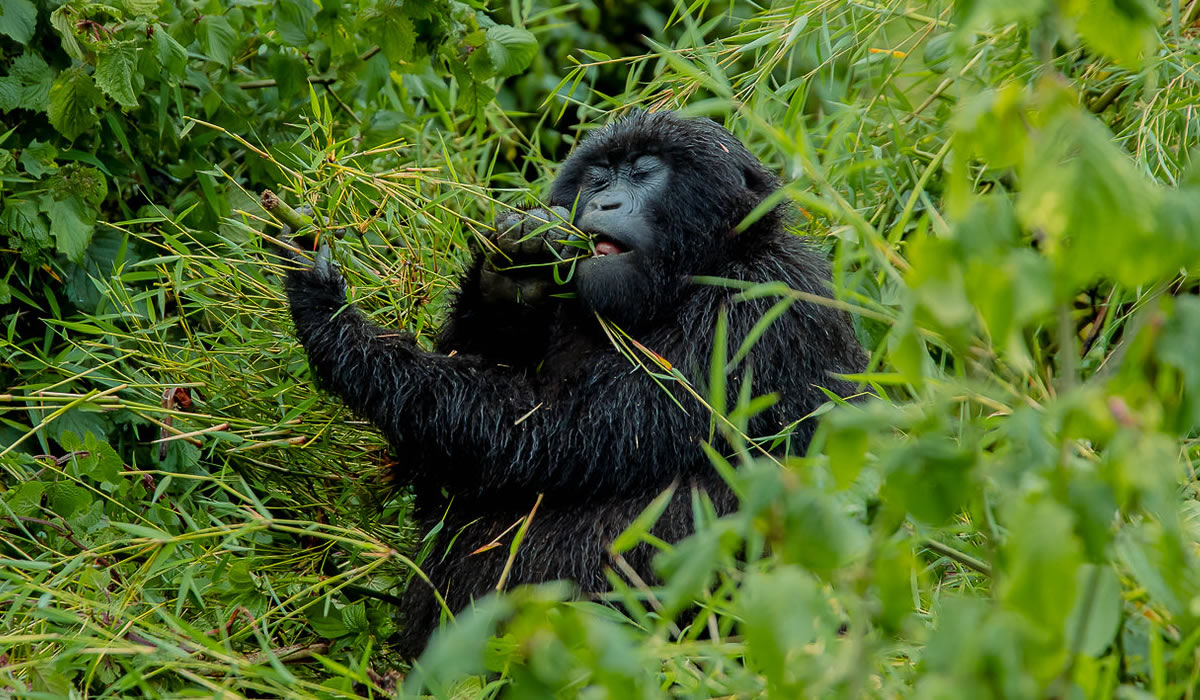
The location of the gorilla family you are tracking is also more important than the weather alone. Mountain gorillas move freely through the forest, so your trek could be relatively short or require several hours of hiking regardless of the season.
If gorilla trekking is the main purpose of your Uganda safari, it is therefore wise to prioritise gorilla permit availability and the overall itinerary rather than choosing dates solely because of the weather.
Visiting Uganda from June to September
June to September is one of the most popular periods for a Uganda wildlife safari. These months generally offer favourable conditions for exploring savannah parks and combining game drives with gorilla trekking.
The relatively dry conditions can make roads and walking trails more manageable, while wildlife viewing is often rewarding. This is particularly useful if your itinerary includes several national parks and you want to spend significant time on game drives.
June and July can be particularly attractive for a classic Uganda safari, while August and September can also provide excellent conditions.
The main disadvantage is increased demand. Accommodation in popular safari destinations can become busy, and gorilla permits may need to be reserved well ahead of your planned travel dates.
If you are planning a safari during this period, early booking is recommended.
Visiting Uganda from December to February
December to February provides another favourable period for a Uganda safari and gorilla trekking holiday.
The weather is generally drier than during the wetter months, making this a popular time for wildlife viewing and outdoor activities. You can combine gorilla trekking in Bwindi with chimpanzee tracking in Kibale and game drives in Queen Elizabeth or Murchison Falls National Parks.
February can be particularly good for wildlife viewing because conditions are often relatively dry, although exact weather patterns vary each year.
December can be busy around the Christmas and New Year period, so accommodation and permits should be arranged early if you plan to visit at this time.
Visiting Uganda from March to May
March to May is generally associated with one of Uganda’s wetter periods. This does not mean that you should avoid travelling during these months.
For you if you enjoy lush scenery and do not mind occasional rain, the wet season can provide a beautiful safari experience. Uganda’s forests and savannah landscapes become particularly green, creating excellent conditions for photography.
Rainfall can make some roads and gorilla trekking trails more challenging, particularly after heavy downpours. You should therefore bring suitable waterproof clothing and footwear.
One major advantage of travelling during this period can be lower demand. Some lodges may offer more competitive rates, and you may find fewer people at popular attractions.
If you are flexible and want to reduce your safari budget, the wetter months can be worth considering.
Visiting Uganda from October to November
October and November form another generally wetter period, but they can still be rewarding months for a Uganda safari.
The landscape is often lush and green, and birdwatching can be particularly interesting. Migratory birds begin appearing in Uganda, adding to the country’s already impressive birdlife.
Gorilla trekking remains available, although wet conditions can make the forest trails muddy and slippery.
For you if your priorities include photography, birdwatching and fewer crowds, October and November can be excellent alternatives to the busier dry-season months.
Best Time for Wildlife Viewing in Uganda
The best time for wildlife viewing in Uganda generally coincides with the drier seasons. During these periods, animals can be easier to locate because vegetation is less dense and water sources may become more concentrated.
In Queen Elizabeth National Park, you can search for elephants, buffaloes, lions, leopards, hippos and Uganda kob during game drives. A boat cruise on the Kazinga Channel adds another excellent opportunity to see hippos, crocodiles and waterbirds.
Murchison Falls National Park offers some of Uganda’s best traditional safari experiences. You can combine game drives across the savannah with a boat cruise towards the base of Murchison Falls.
Kidepo Valley National Park is particularly spectacular for you if you want a remote safari experience. The park is located in north-eastern Uganda and has a distinctive landscape of rugged mountains, expansive plains and seasonal valleys.
Lake Mburo National Park is another convenient option, particularly if you are travelling between Kampala and the south-western part of the country.
Best Time for Chimpanzee Tracking
If you plan to combine chimpanzee tracking with gorilla trekking, the drier months can provide favourable hiking conditions in Kibale National Park.
Chimpanzee tracking involves walking through forest rather than viewing wildlife from a safari vehicle, so trail conditions matter. During wetter months, the forest can become muddy and more difficult to navigate.
Nevertheless, chimpanzee tracking is available throughout the year, and the wet season can offer a beautiful forest experience.
For a primate-focused Uganda safari, you can combine Kibale with Bwindi to experience both chimpanzees and mountain gorillas during the same trip.
Best Time for Birdwatching in Uganda
Uganda is one of Africa’s outstanding birdwatching destinations, with hundreds of bird species recorded across its forests, wetlands, lakes and savannahs.
Birdwatching is possible throughout the year, but the wetter months can be especially attractive because food is more readily available and vegetation is flourishing. The arrival of migratory birds also adds another dimension to birding during certain periods.
If birdwatching is one of your main interests, it may be worth sacrificing some of the advantages of the dry season in favour of the greener months.
Destinations such as Bwindi, Kibale, Murchison Falls, Queen Elizabeth and Mabamba Wetland offer excellent opportunities for bird enthusiasts.
Is the Wet Season a Bad Time for Gorilla Trekking?
Not at all. One of the biggest misconceptions about gorilla trekking in Uganda is that you should never visit during the wet season.
Rain can make trekking more challenging, but it does not necessarily make the experience less rewarding. The rainforest becomes intensely green, waterfalls and streams can be more impressive, and the scenery can be spectacular.
The gorillas do not disappear when it rains. You can still track and observe them according to the same conservation guidelines.
The main consideration is preparation. Waterproof clothing, sturdy hiking boots and appropriate layers can make a major difference.
The wet season may also suit you if you prefer quieter travel and want to explore Uganda when demand is generally lower.
Best Time for a Uganda Gorilla and Wildlife Safari
If you want to combine gorilla trekking and wildlife safari experiences, June to September is one of the strongest choices. It offers generally favourable conditions across several regions and is suitable for game drives, forest trekking and other outdoor activities.
December to February is another excellent option.
A typical itinerary could include Kibale National Park for chimpanzee tracking, Queen Elizabeth National Park for game drives and a Kazinga Channel boat cruise, and Bwindi Impenetrable National Park for gorilla trekking.
If you have more time, you can extend the trip to Murchison Falls or Kidepo Valley National Park.
How Many Days Do You Need?
The length of your Uganda safari will influence how much you can comfortably experience.
A 3-day Uganda gorilla tour can focus primarily on travelling to Bwindi, gorilla trekking and returning to your starting point. This is suitable if you have limited time.
A 5 to 7-day itinerary allows you to combine gorilla trekking with destinations such as Queen Elizabeth or Kibale.
For a more comprehensive Uganda safari, 10 to 14 days gives you enough time to explore multiple national parks without rushing between destinations.
If you are visiting Uganda specifically for gorilla trekking, allow sufficient time for road transfers. Bwindi is several hours from Kampala and Entebbe, while your exact journey time depends on the route and trekking sector.
What to Pack for a Uganda Safari
Regardless of when you visit, you should pack practical clothing suitable for changing conditions.
For gorilla trekking, sturdy hiking boots, long trousers, long-sleeved shirts, a waterproof jacket and gardening-style gloves can be useful. You should also bring insect repellent, sunscreen, a hat, drinking water and a small backpack.
For game drives, lightweight clothing, binoculars and a camera are valuable additions. During cooler mornings and evenings, especially in higher-altitude areas, a light fleece or jumper can be useful.
If you visit during the wetter months, prioritise waterproof equipment and clothing.
So, What Is the Best Month to Visit Uganda?
There is no single month that is perfect for everyone, but June, July, August, September, December, January and February are generally among the best months for a combined Uganda safari and gorilla trekking holiday.
If your priority is easy trekking and traditional wildlife viewing, choose a dry-season month.
If you prefer greener scenery, fewer visitors and potentially better-value accommodation, consider the wetter months.
The most important thing is to match the season with your priorities. A good safari itinerary should consider not only the weather but also gorilla permit availability, park conditions, accommodation and the amount of time you have available.
Plan Your Uganda Safari and Gorilla Trekking Holiday
Uganda is one of Africa’s most diverse safari destinations, and you can visit at virtually any time of year. The best time to visit Uganda for a safari and gorilla trekking is generally during the drier months of June to September and December to February, particularly if you want comfortable trekking conditions and reliable wildlife viewing.
However, Uganda’s wet seasons should not be overlooked. March to May and October to November can offer lush landscapes, excellent photography, impressive birdlife and fewer visitors.
Ultimately, the best Uganda safari is one that matches your interests rather than simply following a calendar. Whether you dream of standing in the rainforest with mountain gorillas, watching elephants on the savannah, tracking chimpanzees in Kibale or cruising along the Kazinga Channel, Uganda offers remarkable experiences throughout the year.
With a well-planned itinerary and the help of a knowledgeable local tour company, you can choose the right season, accommodation and destinations to create an unforgettable Uganda safari and gorilla trekking holiday.
About The Author