Artificial Intelligence has moved far beyond simple automation and conversational tools. In 2026, one of the most transformative developments shaping businesses and institutions worldwide is agentic AI, combined with fully autonomous workflows. These systems do not merely respond to commands or automate isolated tasks. They perceive goals, plan actions, make decisions, execute multi step processes, and continuously improve with minimal human intervention. As organizations face growing pressure to do more with fewer resources, agentic AI is redefining what productivity truly means.
This new era marks a shift from task assistance to outcome ownership. Instead of helping humans complete work faster, agentic AI increasingly takes responsibility for entire workflows, delivering measurable results across industries.
Understanding Agentic AI
Agentic AI refers to artificial intelligence systems designed with a sense of agency. These systems can set sub goals, evaluate options, select tools, and act independently within defined boundaries. Unlike traditional automation scripts that follow fixed rules, agentic AI adapts to changing conditions and learns from feedback.
At the core of agentic AI are advanced reasoning models, long term memory, and tool use capabilities. These systems can interact with software applications, databases, APIs, and even other AI agents. This allows them to function more like digital employees than conventional software.
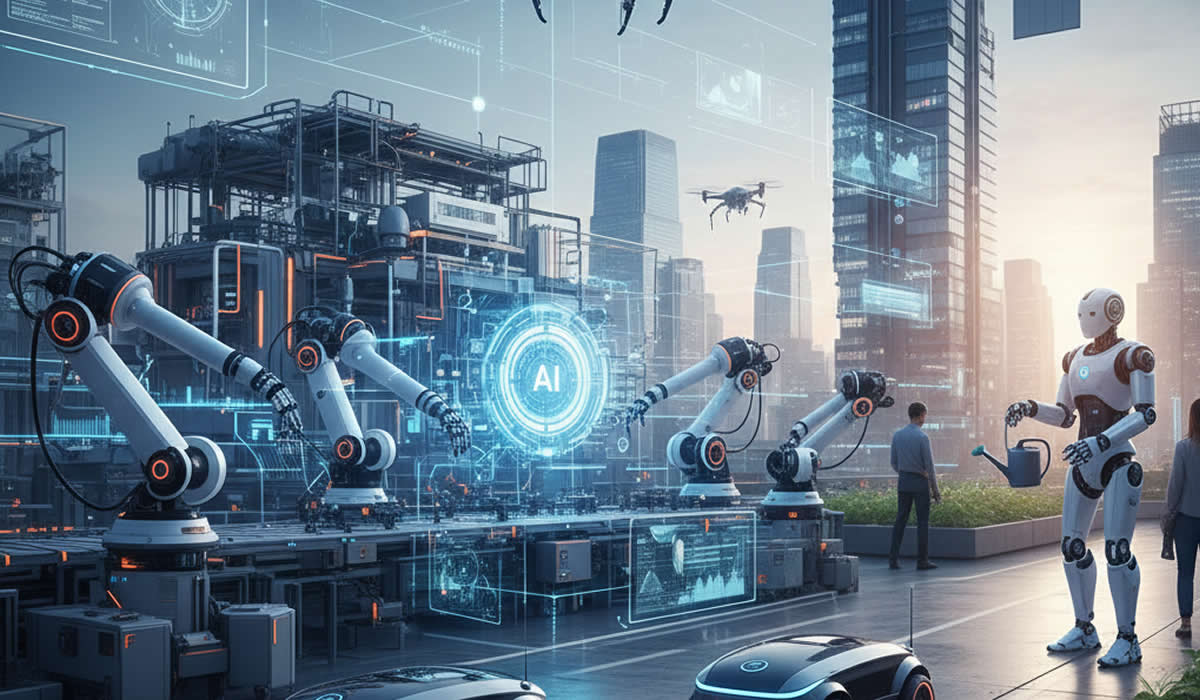
In 2026, agentic AI is no longer experimental. It is embedded in enterprise platforms, cloud services, and operational systems, quietly orchestrating work behind the scenes.
From Automation to Autonomous Workflows
Automation has existed for decades, but it traditionally focused on repetitive, predictable tasks. Autonomous workflows go several steps further. They manage end to end processes that once required constant human supervision.
An autonomous workflow can begin with a high level objective, such as increasing customer retention or reducing operational costs. The AI then breaks this objective into actionable steps, assigns tasks to specialized agents, monitors progress, and adjusts strategies based on real time data.
For example, an autonomous marketing workflow may analyze customer behavior, generate campaign ideas, design content, schedule distribution, monitor performance, and refine messaging without manual coordination. Human teams intervene only to set strategic direction or approve sensitive decisions.
This shift is redefining productivity by reducing friction, delays, and handoffs that traditionally slow down work.
Productivity Redefined in 2026
Productivity in the agentic AI era is no longer measured solely by hours worked or tasks completed. Instead, it is evaluated by outcomes achieved per unit of human effort.
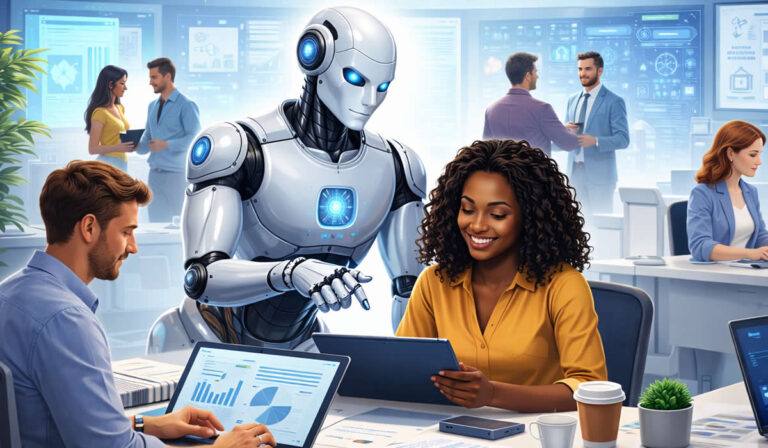
Agentic systems enable organizations to scale operations without proportional increases in staff. One human manager can now oversee multiple autonomous workflows, each performing the work of entire teams. This does not eliminate human roles, but it fundamentally changes them.
Employees focus more on strategy, creativity, ethics, and relationship building. Routine execution, coordination, and monitoring are increasingly handled by AI agents. As a result, organizations experience faster execution cycles, higher consistency, and fewer errors.
Impact Across Key Industries
Business and Enterprise Operations
In corporate environments, agentic AI manages procurement, finance, compliance, and reporting workflows. It reconciles data across systems, flags anomalies, negotiates with vendors through digital channels, and prepares executive summaries.
Decision making becomes more data driven and timely. Instead of waiting for weekly reports, leaders receive continuous insights and recommendations generated by autonomous agents.
Software Development and IT
Agentic AI has transformed software development pipelines. Autonomous agents write code, run tests, identify bugs, deploy updates, and roll back changes if issues arise. They collaborate with human developers by handling routine coding tasks and infrastructure management.
IT operations benefit from self healing systems. When outages or security threats occur, AI agents diagnose problems, apply fixes, and document actions in real time.
Customer Support and Experience
Customer service has evolved from reactive support to proactive engagement. Agentic AI monitors customer interactions, predicts issues before they escalate, and initiates solutions automatically.
Autonomous workflows handle ticket routing, knowledge base updates, sentiment analysis, and follow ups. This results in faster resolution times and more personalized experiences.
Healthcare and Research
In healthcare, agentic AI supports administrative workflows, diagnostics, and research coordination. Autonomous systems schedule appointments, manage patient records, and assist clinicians by synthesizing medical data.
In research environments, AI agents design experiments, analyze datasets, and generate hypotheses, accelerating discovery while allowing researchers to focus on interpretation and ethical oversight.
The Human Role in an Agentic AI World
Despite concerns about job displacement, agentic AI in 2026 is more about role transformation than replacement. Humans remain essential for setting goals, defining constraints, and making value based decisions.
Trust, empathy, and judgment cannot be fully automated. As AI systems gain autonomy, organizations increasingly rely on humans to guide ethical standards, ensure transparency, and maintain accountability.
New roles have emerged, such as AI workflow supervisors, prompt architects, and AI ethics officers. These professionals bridge the gap between human intent and machine execution.
Governance, Ethics, and Control
With increased autonomy comes increased responsibility. Agentic AI systems must operate within clearly defined governance frameworks. In 2026, organizations prioritize guardrails, audit trails, and explainability.
Autonomous workflows are designed with approval thresholds, escalation rules, and continuous monitoring. Sensitive decisions, such as financial approvals or legal actions, require human validation.
Ethical considerations include bias mitigation, data privacy, and accountability for AI driven actions. As agentic systems act more independently, transparency becomes critical for maintaining trust among employees, customers, and regulators.
Challenges and Limitations
While the productivity gains are substantial, agentic AI is not without challenges. Designing reliable autonomous workflows requires high quality data, robust infrastructure, and careful system integration.
Errors can propagate quickly if oversight is inadequate. Organizations must invest in testing, simulation, and fail safe mechanisms. There is also a learning curve as teams adapt to collaborating with autonomous agents.
Cultural resistance remains a factor. Employees may initially distrust AI systems that make decisions traditionally handled by humans. Clear communication and gradual implementation are essential for successful adoption.
The Future of Work Beyond 2026
Agentic AI represents a foundational shift rather than a temporary trend. As these systems mature, they will become more collaborative, contextual, and aligned with human values.
Future autonomous workflows will span multiple organizations, coordinating supply chains, logistics, and partnerships with minimal friction. Productivity will increasingly be defined by adaptability and resilience rather than sheer speed.
Organizations that embrace agentic AI thoughtfully will gain a significant competitive advantage. Those that resist may struggle to keep pace in a world where intelligent systems operate continuously and at scale.
In 2026, agentic AI and autonomous workflows are redefining productivity by transforming how work is planned, executed, and measured. These systems move beyond automation to take ownership of outcomes, enabling organizations to achieve more with less effort.
Rather than replacing humans, agentic AI reshapes roles, elevates strategic thinking, and reduces operational burden. With proper governance and ethical oversight, it offers a powerful path toward sustainable growth and innovation.
As businesses, institutions, and individuals adapt to this new paradigm, productivity is no longer just about working harder or faster. It is about designing intelligent systems that work alongside humans to deliver meaningful results in an increasingly complex world.
About The Author