
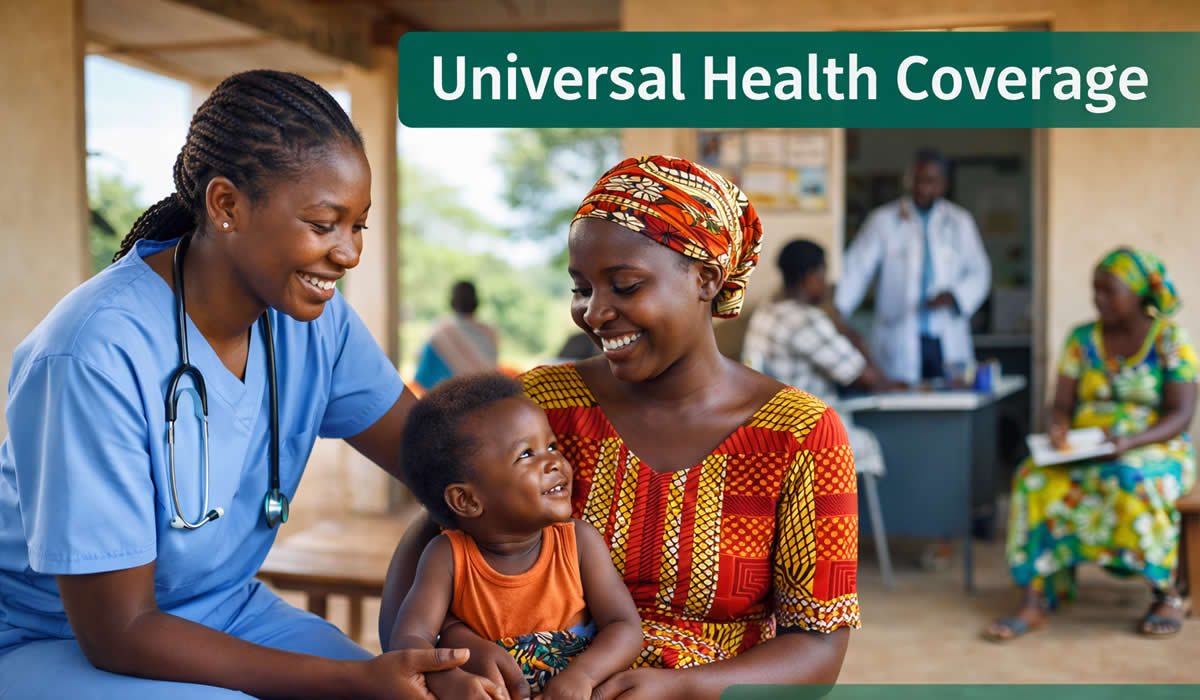
Universal Health Coverage (UHC) is no longer just a global aspiration, it is gradually becoming a tangible reality across Africa. For decades, millions of people on the continent faced barriers to accessing basic healthcare services due to cost, geography, and systemic challenges. Today, countries are adopting innovative strategies, partnerships, and policies aimed at ensuring that every person can access quality healthcare without suffering financial hardship. Understanding the progress, challenges, and future of UHC in Africa is crucial for policymakers, health professionals, and communities alike.
What Is Universal Health Coverage?
Universal Health Coverage refers to a health system in which all individuals and communities receive the health services they need, prevention, treatment, rehabilitation, and palliative care without enduring financial strain. UHC is a core target of the United Nations Sustainable Development Goals (SDGs), specifically SDG 3.8, and it emphasizes equity, quality, and accessibility in healthcare.
For Africa, achieving UHC means addressing long-standing gaps in access, affordability, and quality of care. It requires strengthening health infrastructure, financing models, workforce capacity, and governance systems while ensuring that marginalized populations are not left behind.
Progress in Health Financing
A critical component of UHC is sustainable health financing. Many African countries have historically relied on out-of-pocket payments, which often push vulnerable families into poverty. In recent years, however, there has been a shift toward prepayment schemes, health insurance expansion, and government-funded programs.
Countries such as Ghana and Rwanda have made significant strides through national health insurance systems. Ghana’s National Health Insurance Scheme (NHIS) covers a large portion of the population and provides access to essential services, including maternal care, child health services, and treatment for chronic illnesses. Rwanda’s Community-Based Health Insurance program has similarly increased access, particularly in rural areas, by pooling risk and making healthcare affordable for low-income households.
In addition to domestic financing, international partnerships and donor funding continue to play an important role. Programs supported by organizations such as the World Bank, the Global Fund, and Gavi have provided critical resources for vaccines, HIV/AIDS treatment, malaria control, and maternal health initiatives. While reliance on external funding presents challenges for sustainability, these investments have accelerated progress toward UHC in key health areas.
Strengthening Health Infrastructure
Expanding access to healthcare services requires more than financing, it also demands robust infrastructure. Across Africa, governments are investing in hospitals, clinics, laboratories, and digital health systems to bring quality care closer to communities.
Rural and underserved areas, in particular, have historically faced severe shortages of health facilities. Mobile clinics, telemedicine, and community health worker programs are helping bridge these gaps. For instance, mobile health units in Kenya and Nigeria deliver maternal and child health services to remote regions, while telehealth platforms connect patients with specialists in urban centers. These initiatives reduce travel burdens, lower costs, and ensure that essential care reaches those who need it most.
Investments in laboratory networks, diagnostic equipment, and supply chain systems are also critical. Accurate diagnosis and timely treatment are central to UHC, particularly for infectious diseases like malaria, tuberculosis, and HIV/AIDS, as well as emerging health threats. Strengthening these systems ensures that care is both available and reliable.
Digital Health as a Catalyst
Digital technology is playing an increasingly transformative role in advancing UHC across Africa. Health information systems, electronic medical records, mobile health apps, and telemedicine platforms improve efficiency, coordination, and data-driven decision-making.
For example, electronic medical records allow healthcare providers to track patient history, monitor chronic conditions, and reduce errors. Mobile health platforms provide reminders for vaccinations, antenatal care, and medication adherence, while telemedicine services connect patients in remote areas to trained medical professionals. These technologies are not only improving access to care but also empowering patients to take a more active role in managing their health.
Artificial intelligence and data analytics are also being leveraged to predict disease outbreaks, allocate resources, and optimize healthcare delivery. By analyzing trends in patient data, governments and health organizations can better target interventions and ensure equitable distribution of services.
Community Engagement and Health Education
Achieving UHC requires more than facilities and funding, it requires community participation and trust. Health education campaigns, community health workers, and local advocacy groups play a pivotal role in promoting healthy behaviors, disease prevention, and timely care-seeking.
Community health workers (CHWs) are particularly vital in rural and underserved areas. They provide basic health services, educate communities about hygiene and disease prevention, and refer patients to higher-level care when needed. Programs in Ethiopia, Malawi, and Senegal demonstrate that well-supported CHWs can dramatically improve maternal and child health outcomes, reduce disease prevalence, and build community confidence in the health system.
Health education campaigns, often delivered through radio, social media, and local gatherings, raise awareness about vaccination, nutrition, reproductive health, and chronic disease management. Educated communities are more likely to seek preventive care, adhere to treatment plans, and participate in health insurance schemes, key factors in achieving UHC.
Addressing Equity and Marginalized Populations
One of the central goals of UHC is ensuring that no one is left behind. Africa faces unique equity challenges, including disparities between urban and rural areas, gender inequalities, and the exclusion of vulnerable groups such as refugees, people with disabilities, and those living in extreme poverty.
Targeted policies and programs are helping to reduce these inequities. For example, some countries offer free maternal and child health services, subsidized insurance premiums, or mobile health outreach for remote communities. Efforts to provide culturally sensitive care, language access, and gender-responsive services are essential to ensure that marginalized populations receive the same quality of care as the general population.
Success Stories Across the Continent
Several African countries offer examples of progress toward UHC.
- Rwanda: Through community-based insurance and robust government support, Rwanda has achieved high coverage rates and improved access to essential health services, particularly in rural areas.
- Ghana: The NHIS has expanded access to primary care, maternal health services, and chronic disease management for millions of citizens.
- Ethiopia: Investments in community health extension programs have significantly reduced child mortality and increased vaccination rates.
- Senegal: The country has integrated digital health platforms and community health networks to improve care coordination and monitor public health trends.
These success stories demonstrate that UHC is achievable through a combination of innovative financing, infrastructure development, community engagement, and political commitment.
Challenges and the Road Ahead
Despite progress, Africa still faces significant challenges in achieving UHC. Health workforce shortages, limited funding, and gaps in infrastructure remain obstacles. Political instability, corruption, and weak governance can also hinder effective healthcare delivery.
Sustainability is another key concern. Many programs still rely on donor funding, which can fluctuate with global priorities. Strengthening domestic financing, improving efficiency, and prioritizing health in national budgets will be critical for long-term success.
Finally, emerging health threats, such as pandemics, climate change-related diseases, and non-communicable diseases, pose ongoing challenges. Addressing these issues requires adaptive health systems that can respond quickly while maintaining access and quality.
Universal Health Coverage is becoming a reality across Africa, driven by innovative policies, health financing reforms, digital technologies, and community-focused strategies. While challenges remain, the progress achieved demonstrates that equitable, quality healthcare for all is achievable.
For UHC to succeed, governments must continue investing in infrastructure, workforce development, and digital systems, while ensuring that marginalized populations are not left behind. Communities, healthcare providers, and international partners all have a role to play in creating resilient health systems that prioritize accessibility, affordability, and quality.
Africa’s journey toward UHC is not just a healthcare initiative, it is a commitment to social justice, economic development, and human wellbeing. By combining political will, innovative solutions, and community engagement, the continent is making measurable strides toward a future where every individual can receive the care they need without financial hardship.
As these efforts continue to expand, the vision of Universal Health Coverage across Africa is moving from aspiration to reality, offering hope for healthier, more equitable societies for generations to come.
About The Author